Funded by Americans, Priced Out of Reach: The Hidden Contradiction at the Heart of Orphan Drug Development

Every year, tens of thousands of Americans living with rare diseases enroll in clinical trials, donate tissue samples, and participate in federally funded research programs — all in the hope that science will eventually deliver a treatment capable of changing their lives. Many of those treatments do arrive. What often does not arrive alongside them is an affordable price.
The orphan drug market — defined in the United States by the Orphan Drug Act of 1983 as medications targeting conditions affecting fewer than 200,000 Americans — has become one of the most financially rewarding segments of the global pharmaceutical industry. It has also become one of the most contentious, raising fundamental questions about who bears the cost of medical innovation and who ultimately benefits from it.
What Makes Orphan Drugs Different — and Expensive
The Orphan Drug Act was designed with genuinely good intentions. Before its passage, pharmaceutical companies had little financial motivation to develop treatments for small patient populations. The economics were straightforward: limited patient pools meant limited revenue, and drug development is extraordinarily expensive. The legislation changed the calculus by offering manufacturers a suite of incentives: seven years of market exclusivity, federal tax credits covering a significant portion of clinical trial costs, and expedited regulatory review through the Food and Drug Administration.
The result has been a dramatic increase in rare disease research. More than 600 orphan drugs have received FDA approval since the act took effect, compared with fewer than ten in the decade preceding it. By that measure, the policy has been an unambiguous success.
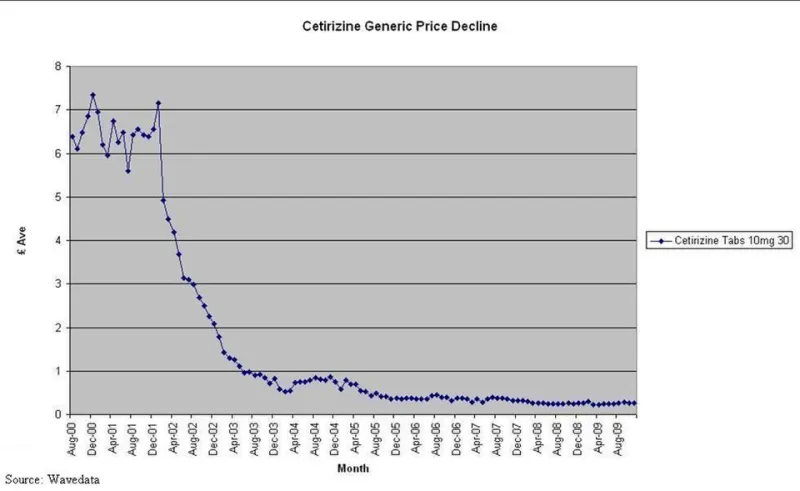
The complication emerges at the pharmacy counter. Because orphan drugs carry market exclusivity periods that delay generic competition, and because manufacturers face a smaller potential customer base over which to spread development costs, list prices for these medications frequently reach six or seven figures annually. Treatments for conditions such as spinal muscular atrophy, certain lysosomal storage disorders, and rare blood cancers routinely cost between $500,000 and $3 million per patient per year in the United States.
The Taxpayer's Invisible Contribution
What many Americans do not fully appreciate is the extent to which federal dollars underwrite the foundational science behind these medications. The National Institutes of Health, funded entirely by taxpayers, invests approximately $45 billion annually in biomedical research. A substantial portion of that funding flows into basic and translational research that private pharmaceutical companies later convert into commercial products.
A 2019 study published in the Proceedings of the National Academy of Sciences found that every single one of the 210 drugs approved by the FDA between 2010 and 2016 had received NIH funding at some stage of its development — with total public investment exceeding $100 billion over that period. Orphan drugs, which disproportionately rely on academic medical centers and government-supported rare disease consortia for early-stage research, are particularly dependent on this public infrastructure.
Beyond direct research grants, the tax credits embedded in the Orphan Drug Act represent another form of public subsidy. Companies can claim credits worth a substantial percentage of qualified clinical testing expenses. Critics argue that these incentives, originally designed to encourage development of genuinely neglected treatments, have increasingly been claimed by large pharmaceutical corporations for diseases that were already commercially attractive — effectively shifting risk onto the public while concentrating profit in private hands.
When Other Countries Get There First — or Pay Less
Perhaps the most striking dimension of the orphan drug paradox is the frequency with which patients in other countries secure access to these medications on more favorable terms than American patients do.
Within the European Union, the European Medicines Agency operates its own orphan designation framework, and member states negotiate reimbursement prices through national health systems. Those negotiations routinely produce prices substantially lower than US list prices for the same drugs. Germany, France, and the United Kingdom each employ health technology assessment bodies that evaluate whether a drug's clinical benefit justifies its cost — a practice largely absent from the American regulatory and pricing landscape.
In several documented cases, orphan medications that received European approval have been reimbursed at prices representing a fraction of their US equivalents. For American patients who helped fund the clinical trials that generated the approval data submitted to both the FDA and the EMA, this disparity carries a particular sting.
Japan and Canada present similar patterns. Canadian provincial drug plans, operating under a coordinated review process through the Canadian Drug Review, have negotiated confidential rebates that bring net prices for certain orphan drugs significantly below their American counterparts. Some rare disease patient advocates have begun sharing this information through international networks, prompting difficult conversations about cross-border access — conversations that exist in a complex legal and ethical space.
The Patient's Dilemma
For an American diagnosed with a rare disease, the financial reality can be overwhelming. Even with insurance coverage, annual out-of-pocket costs for orphan drugs can reach tens of thousands of dollars. Many insurers impose prior authorization requirements, step therapy protocols, and coverage restrictions that delay or deny access entirely. Patients who lack adequate insurance coverage may find themselves in an impossible position: aware that a treatment exists for their condition, yet unable to obtain it.
Some manufacturers operate patient assistance programs that provide medications at reduced or no cost to qualifying individuals. These programs, while genuinely helpful for some patients, have been criticized for functioning primarily as reputational tools that obscure the underlying pricing problem rather than solving it. Eligibility criteria vary widely, program terms can change without notice, and patients navigating serious illness often lack the administrative capacity to manage complex application processes.
Rare disease advocacy organizations have increasingly taken up the pricing question, pushing for greater transparency in how orphan drug prices are set and calling for reforms that would tie drug costs more directly to clinical evidence of benefit. Some advocates have gone further, arguing that drugs developed with substantial public funding should be subject to reasonable pricing requirements — a position that has gained legislative attention but has yet to produce federal action.
A Global Framework Demands a Global Conversation
The orphan drug paradox is not simply a domestic policy failure. It reflects the collision between a global pharmaceutical development ecosystem and a fragmented international pricing landscape. American patients and institutions provide a disproportionate share of the capital and clinical infrastructure that makes rare disease drug development possible. The financial returns from that investment flow primarily to shareholders. And the pricing power that enables those returns is exercised most aggressively in the United States, where no systematic mechanism exists to evaluate or constrain it.
Patients in other countries, operating within systems that negotiate on their behalf, often pay less for the same treatments. That reality is not an argument against developing orphan drugs — it is an argument for rethinking the terms on which the American public subsidizes their creation.
For patients navigating this landscape today, awareness is an essential first step. Understanding which orphan drugs have received approval in other jurisdictions, what prices those markets have negotiated, and what international patient advocacy resources exist can help inform conversations with physicians, insurers, and policymakers. The global health information environment has never been more accessible, and American patients living with rare diseases deserve to engage with it fully.
The treatments exist. The science, in many cases, was built on American dollars and American patients' courage. The remaining question — who gets to benefit from it, and at what cost — is one that the United States has not yet answered honestly.